How Shipping My Own Products Led to My First Freelance Client
Starting a freelance career can be both exciting and daunting. Here's my journey of landing my first freelance work with Kioskkarte, a Germany based startup, and the lessons I learned along the way.
Updated October 22, 2026
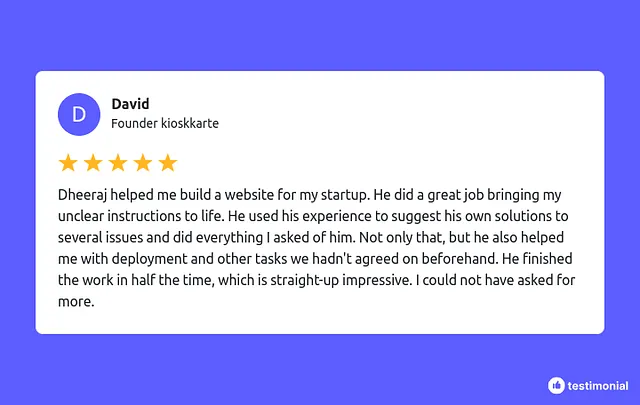
I landed my first freelance project with Kioskkarte, a startup in Germany. The client found my portfolio, looked at the projects I had shipped, and contacted me by email. That enquiry came from work I had already made public.
Looking back, the important change happened before the email arrived: I started treating my projects as products people could actually use.
From GitHub repositories to live projects
In my early projects, I would build something and push the code to GitHub. That was useful for learning, but most potential users were never going to clone the repository and run it locally. They needed a link they could open.
Deploying the projects gave me a different kind of feedback. People could try the interface, point out confusing parts, and tell me whether the idea was useful. It also gave a potential client a concrete example of what I could deliver.
A public launch did not prove the application could scale to any workload. It did let me observe actual use and identify problems that were easy to miss on my own machine.
The projects that made my work visible
Two projects helped people discover my work:
- Design2Code: a website project that reached thousands of visitors and appeared in weekly product rankings on Peerlist and Fazier.
- OncoSight: a hackathon project that helped me win an event and also attracted visitors after launch.
Those launches gave my portfolio more than screenshots. A visitor could see a working application, understand its purpose, and judge whether my skills matched their problem.
How Kioskkarte found me
The client contacted me directly after seeing the work on my portfolio. They were building an MVP and needed a developer who could help bring it to life.
The portfolio made that conversation easier. It already showed the kind of work I could do, and it made my contact information easy to find. I did not have to explain my experience from a blank page.
What the first project taught me
I was responsible for developing Kioskkarte’s MVP. Alongside the implementation, I had to understand the client’s requirements, communicate progress, and adapt when details changed.
The work made a few habits feel much more important:
- Clarify the next deliverable. A shared understanding of what is being built helps both sides review progress.
- Communicate regularly. Short updates and early questions prevent assumptions from becoming expensive changes.
- Ship something people can evaluate. A working version makes feedback more specific.
- Keep learning during delivery. Client work introduces constraints that a personal project may never expose.
What I would recommend to someone starting out
Build a small portfolio of work you can explain well. Describe the problem, your contribution, and what someone can try. Keep the live links working and make it straightforward to contact you.
Publishing projects will not guarantee freelance enquiries. In my case, it created the opportunity for someone with a relevant need to find me and start a conversation. That was the step I had been missing when everything stayed in a repository.
You can find my projects and contact details on my portfolio.